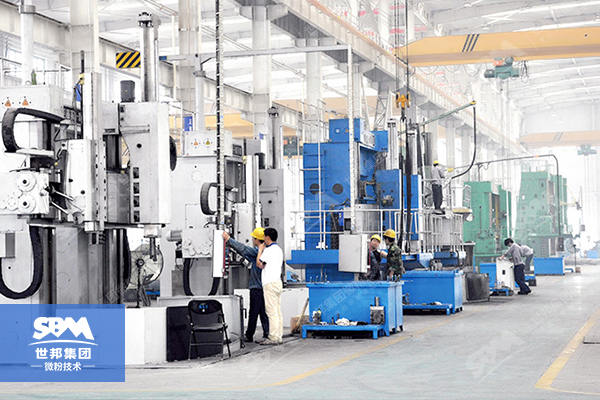
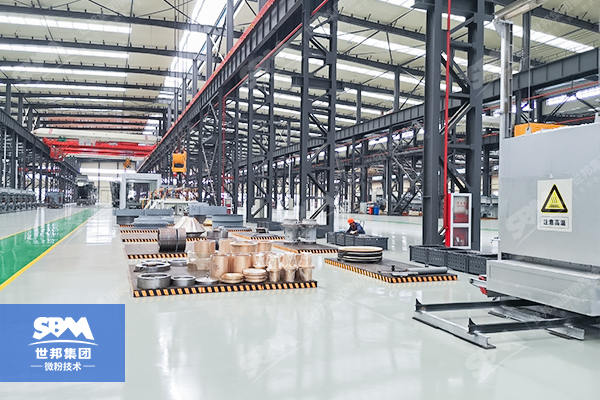
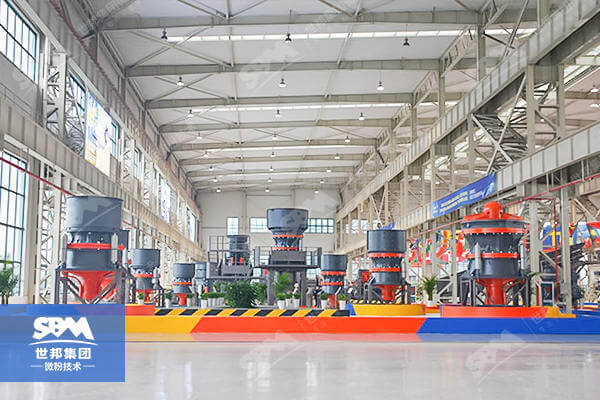
The company's main products are HGM series micro pulverizer, superfine micro pulverizer, micro pulverizer, superfine pulverizer, pulverizer and matching hammer crusher, etc.
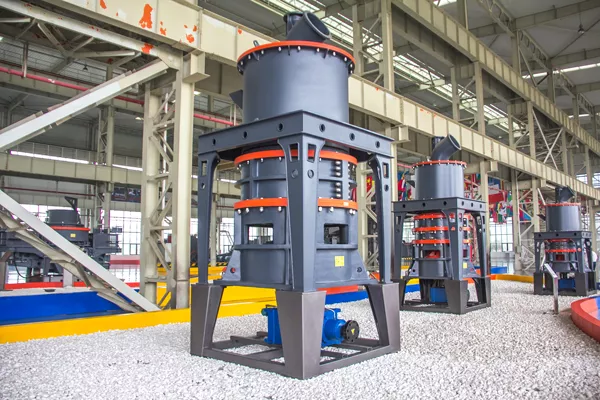
Material: Limestone
Fineness: 800mesh
Capacity: 3 t/h
Purpose:
The demand for high-quality, ultra-fine mineral powders (such as 800-3000 mesh) is growing rapidly across global markets, driven by industries ranging from plastic fillers and coatings to paper making, pharmaceuticals, and advanced ceramics. To meet this escalating demand, choosing the right pulverizing equipment is critical—not just for throughput, but for energy efficiency, particle size precision, and long-term operational stability.
Today, we are thrilled to present a detailed case study of an on-site installation of the HGM80 Ultrafine Grinding Mill. The images provided offer a first-hand look behind the scenes of an industrial-grade grinding plant being assembled inside a modern, spacious workshop. This specific installation project highlights the engineering complexity, structural foundations, and modular assembly that go into creating a high-output micro-powder production line. This case study will walk you through the different phases of installation, from heavy-duty concrete foundation construction and mechanical assembly to the integration of automation and dust collection systems, all featuring our flagship HGM80 ultrafine grinding mill.
The client for this project operates a large-scale industrial facility dedicated to the production of specialized non-metallic mineral powders. Their primary goal was to expand production capacity while maintaining strict control over particle fineness and operational environmental standards. After a thorough evaluation of their raw material characteristics (medium hardness, moderately abrasive) and their target annual output, they selected the HGM80 Ultrafine Grinding Mill as the core engine of their new production line.
The HGM80 ultrafine grinding mill is best known for its ability to process materials with a Mohs hardness of less than 6.3, delivering finished powder fineness ranging from 425 to 3000 mesh. The client’s specifications required a high d97 particle passing rate (typically ≥97%) and a system that minimized energy consumption per ton of output. Furthermore, because the processing of fine powder generates significant dust, the overall installation demanded a sealed, fully integrated system featuring robust dust collection and pneumatic conveying automation.
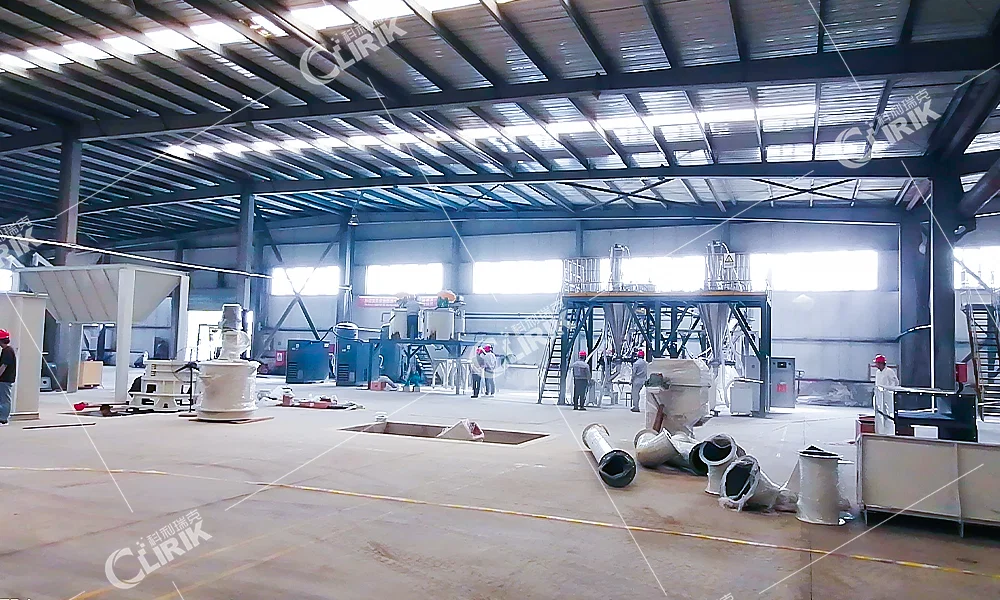
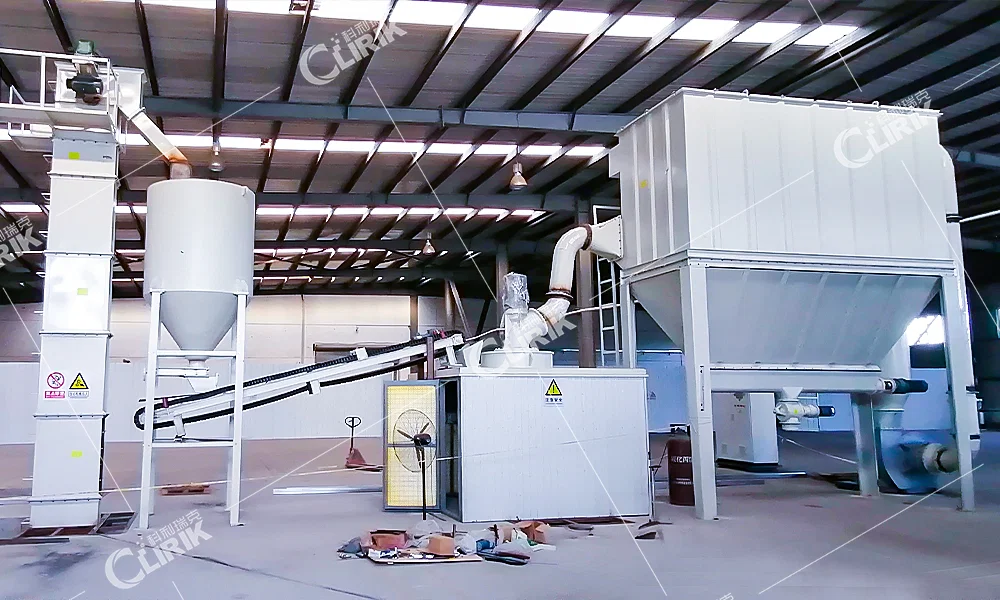
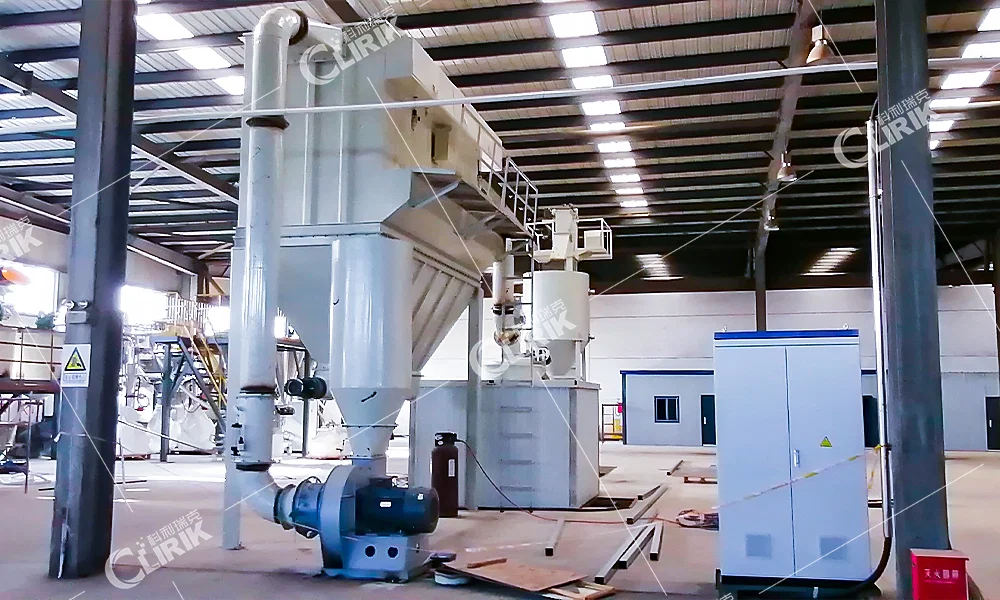
Heavy industrial grinding equipment cannot simply be bolted to a standard workshop floor. The HGM80 ultrafine grinding mill is a heavy-duty machine with a total installed power often exceeding 145-165 kW (including the main mill, classifier, blower, and auxiliary units). It produces significant centrifugal force and vibration during operation.
Structural Grouting and Rebar Reinforcement
Before any equipment could be placed, the site required meticulous civil engineering. The workshop floor was excavated to create deep foundation pits specifically designed for the heavy load of the main unit of HGM80 ultrafine grinding mill. A complex network of heavy-duty rebar and structural steel reinforcement within the foundation pit. These rebar cages are essential for absorbing the dynamic loads and vibration created by the grinding rollers and grinding ring inside the HGM80.
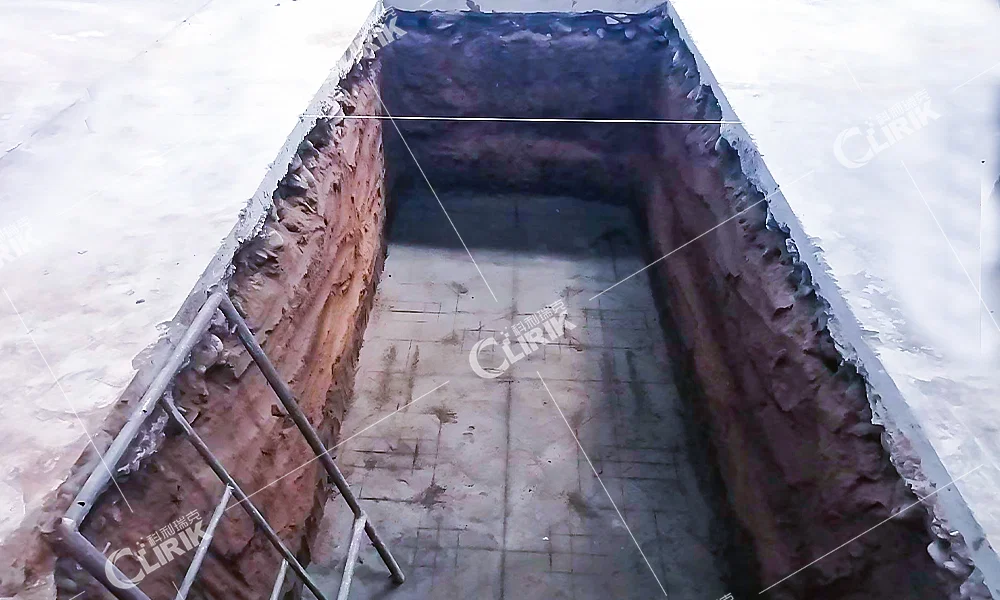
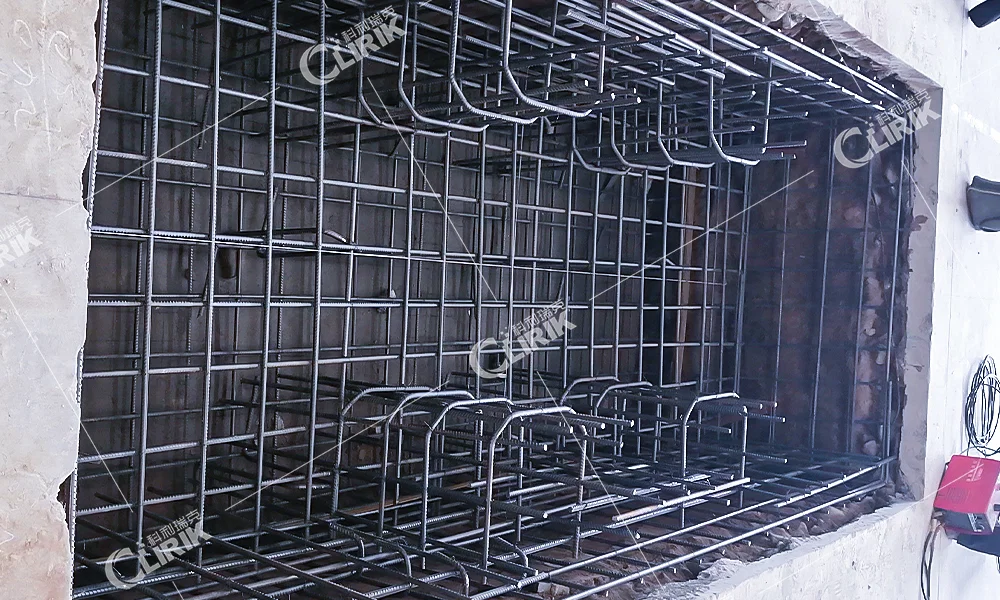
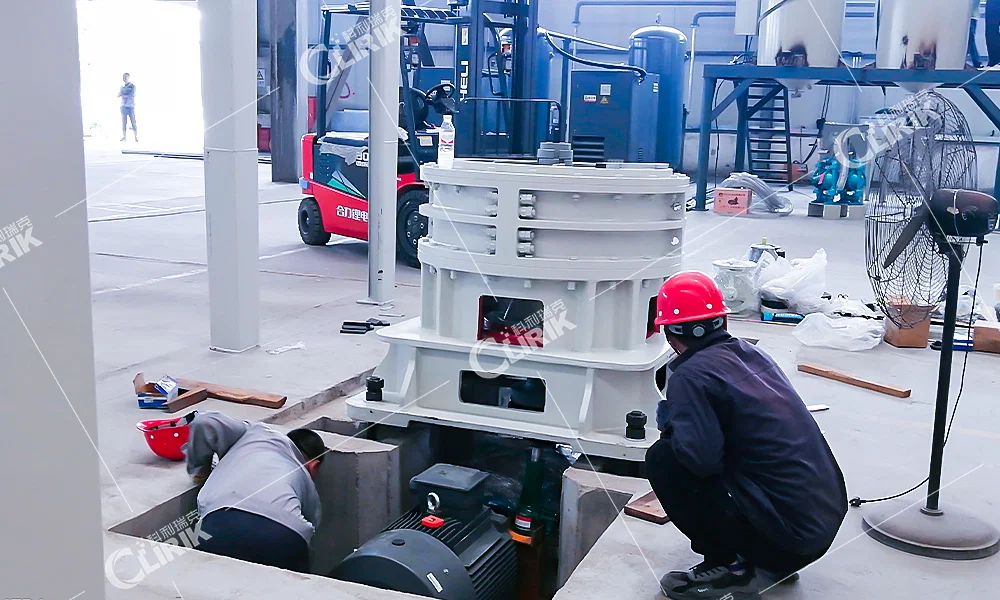
The fully excavated pit prior to pouring the concrete. This depth allows for the housing of the large electric motor and the reduction gearbox, which drive the grinding rollers. By recessing these components underground, the overall height of the machinery is optimized, and the center of gravity is lowered, significantly reducing the machine’s footprint and improving overall structural stability. The meticulous leveling and steel-framed molds ensure that when concrete is poured, the machine bases achieve the precise zero-tolerance leveling required to prevent wear and tear on the bearings over years of continuous operation.
Once the foundation pass was completed and cured, the physical installation of the machinery commenced.
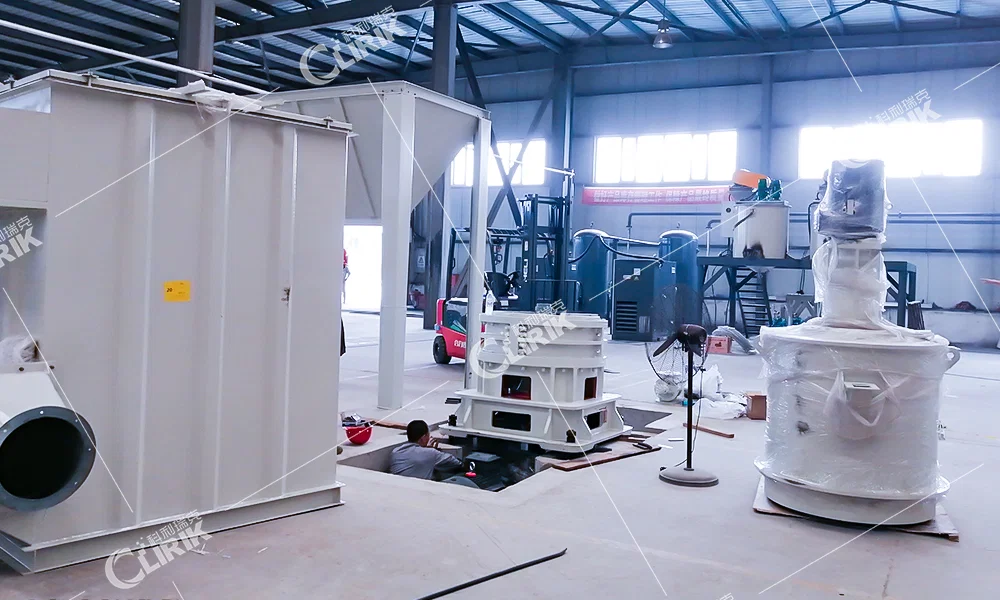
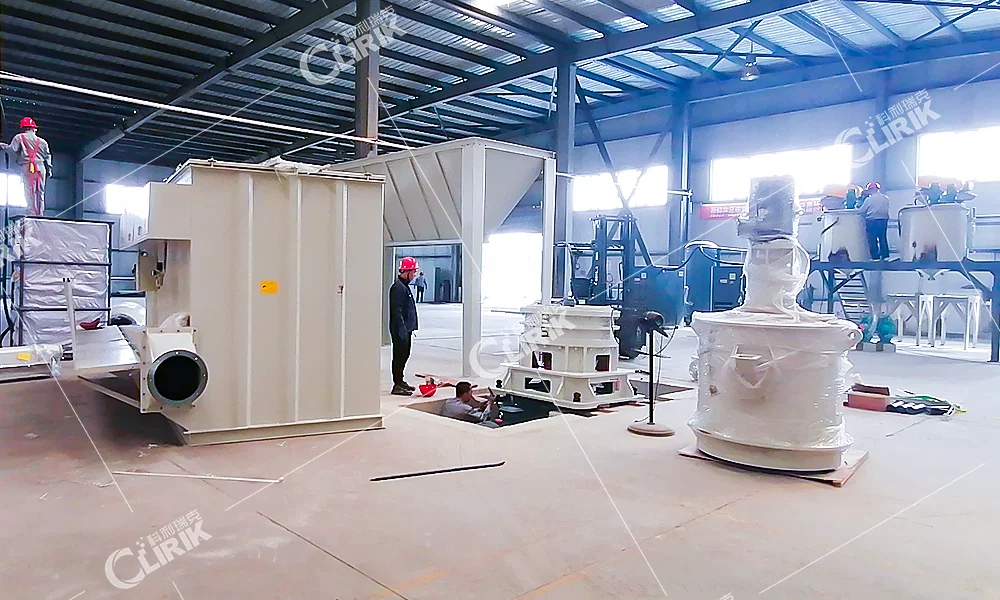
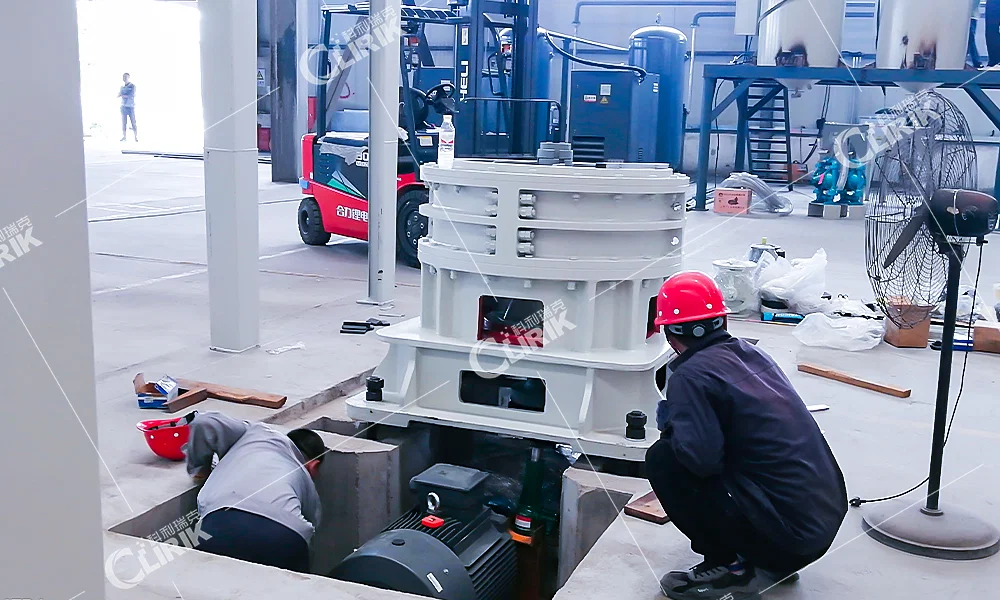
Unboxing and Leveling
The HGM80 main mill and its associated host structure were delivered to the site carefully wrapped in protective plastic film to shield the painted surfaces from scratches, dust, and humidity during transport. Factory-trained technicians are seen executing the critical task of docking the main mill base with the underground motor foundation. The technician with the red hardhat is inspecting the alignment between the mill’s lower frame and the concrete plinth.
This stage is the most technically demanding part of the installation. A millimeter-level misalignment at this level would lead to catastrophic bearing failure or increased vibration down the line. The team utilized precision spacers and laser alignment tools to ensure the main shaft of the HGM80 was perfectly level.
Dust Collection Integration
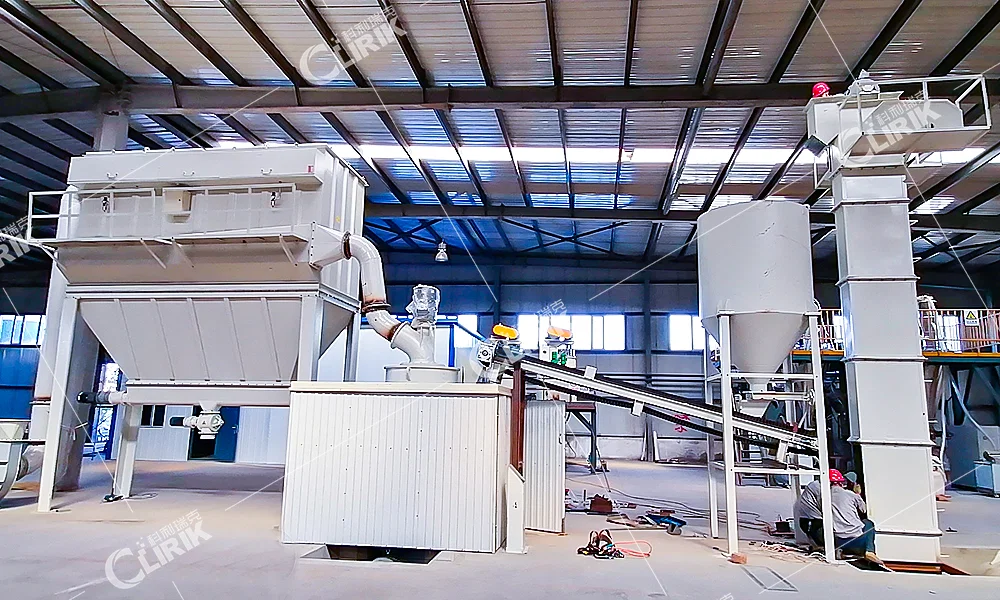
Adjacent to the main unit, the large, boxy structure is a high-efficiency Pulse Jet Dust Collector. High-capacity grinding inevitably generates fine airborne particles. This collector acts as the lungs of the plant, extracting dust from the grinding chamber and bagging the finished product while releasing clean air into the environment. The large flanged adapter on its side connects to the main pipeline, ensuring a negative pressure system that prevents any dust escape.
An ultra-fine grinding plant is not just a mill; it is a complete material handling system.
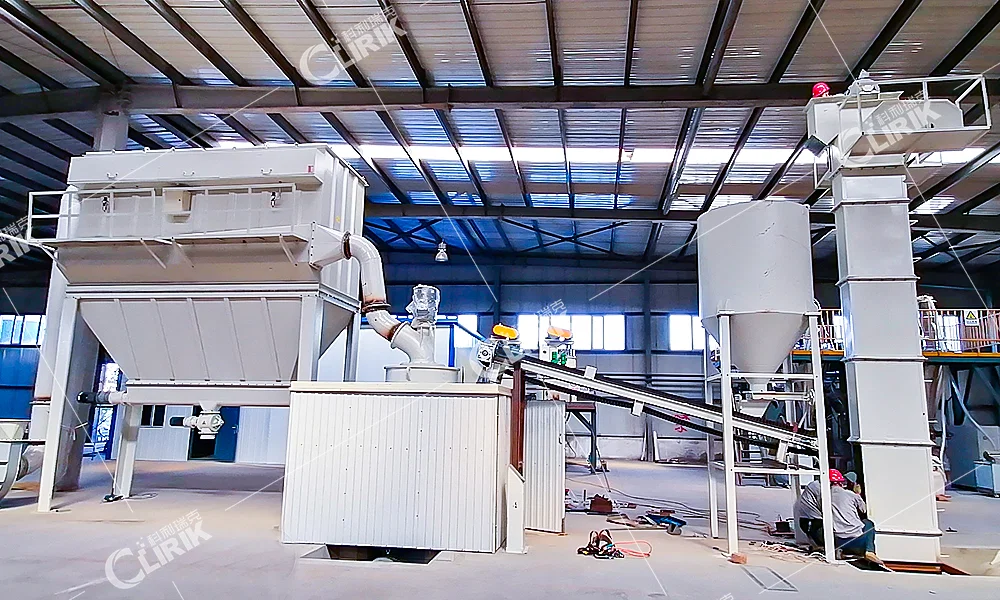
The Vertical Bucket Elevator and SiLo Integration
Raw material must be fed steadily into the HGM80 ultrafine grinding mill. A vertical bucket elevator acting as the main artery, transporting raw material from the ground level to a large storage silo or hopper located above the grinding chamber. This setup enables “starve feeding” or “bed feeding,” depending on the control logic, ensuring the grinding chamber is never overloaded or underfed.
Belt Conveyors and Cyclone Collectors
Directly attached to the main unit, you can see horizontal and inclined belt conveyors. These are responsible for carrying the finished micro-powder from the grinding chamber out to the final packaging or into storage silos. The important piping and valve systems that connect the silos to the conveyors, ensuring a dust-tight seal throughout the transport process.
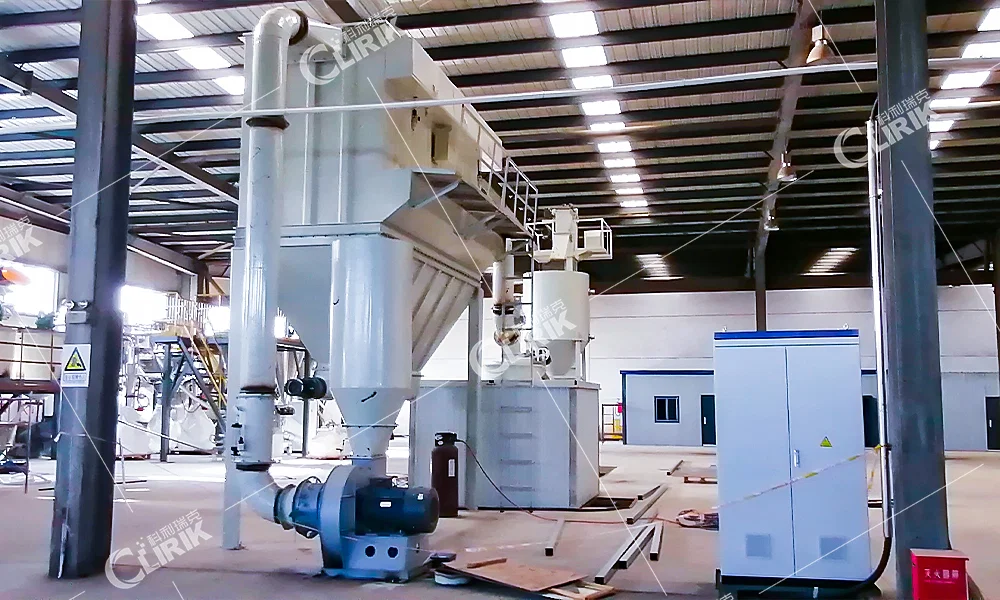
Modern industrial plants require intelligent operation. The electrical control cabinet houses the PLC (Programmable Logic Controller) and the Variable Frequency Drives (VFDs).
Why is this crucial for the HGM80?
The HGM80’s classifier speed directly dictates the fineness of the final powder. By using a VFD circuit, the operator can easily rotate the classifier impeller at different speeds to switch from, for example, 800 mesh to 2000 mesh, without mechanically changing any parts. The control cabinet also monitors key operating parameters:
The cabinet is wired and ready to be connected to the power grid, marking the final stages of the mechanical installation before the cold commissioning phase begins.
A key highlight of this project is the strong emphasis on occupational safety. The workforce is equipped with proper safety gear, including hard hats, work boots, and high-visibility clothing. Safe steel grating and handrails were installed on the elevated platform above the elevator.
These safety measures are non-negotiable in heavy industrial grinding. The steel platforms are built to withstand heavy vibrations. The secure walkways allow technicians to easily access the classifier and top valves for routine maintenance, significantly reducing the risk of falls. Moreover, the use of the Pulse Jet Dust Collector ensures the working environment remains breathable, free from hazardous airborne silica or mineral dust.
The HGM80 is designed for materials with Mohs hardness below 6.3, including limestone, calcite, marble, talc, barite, gypsum, dolomite, kaolin, and bentonite.
The HGM80 produces powder from 325 to 3000 mesh (down to 5 microns) with VFD-adjustable classifier speed.
Yes, it requires a deep reinforced concrete foundation with rebar reinforcement to absorb vibration and dynamic loads.
A high-efficiency pulse jet dust collector maintains negative pressure, captures ultra-fine particles, and ensures emission compliance.
Yes, it includes a PLC-based control cabinet with VFDs for monitoring motor amperage, blower pressure, oil temperature, and classifier speed.
The installation of this HGM80 Ultrafine Grinding Mill is a perfect demonstration of our end-to-end turnkey project capabilities. From the civil engineering of the deep foundation pits to the intricate wiring of the control cabinet, we provide more than just a machine; we provide a fully optimized solution. This setup will soon commence trial production, expected to achieve the client’s target of high-quality, super-fine mineral powder output with lower energy consumption and fully compliant emissions.
If you are looking to set up or upgrade your mineral processing plant, contact us for the world-class grinding technology, professional installation guidance, and long-term after-sales support.
Help customers to select equipment
Free arrangement of engineers to the site for actual survey and plan design
Strict implementation of quality standards, quality assurance of ex-factory products
Free logistics and transportation information, more choices for logistics and transportation
Strictly implement the standard process of preparation and delivery, timely and accurate stock preparation, and rapid delivery
Free arrangements for engineers to guide the basic production of equipment
Provide free technical guidance for equipment installation and commissioning
The free on-site one-to-one operation, repair, maintenance, and other training
Professional after-sales service team, 24 hours response to customer needs
Accepted Delivery Terms: FOB, CFR, CIF, EXW, CPT, DDU, Express Delivery
Accepted Payment Currency: USD
Accepted Payment Type: T/T, L/C, Western Union
CE, ISO9001
factory sell directly
30 years experience, professional
If you have some questions about our products, please feel free to fill out the form below, and we will contact you within 24 hours.