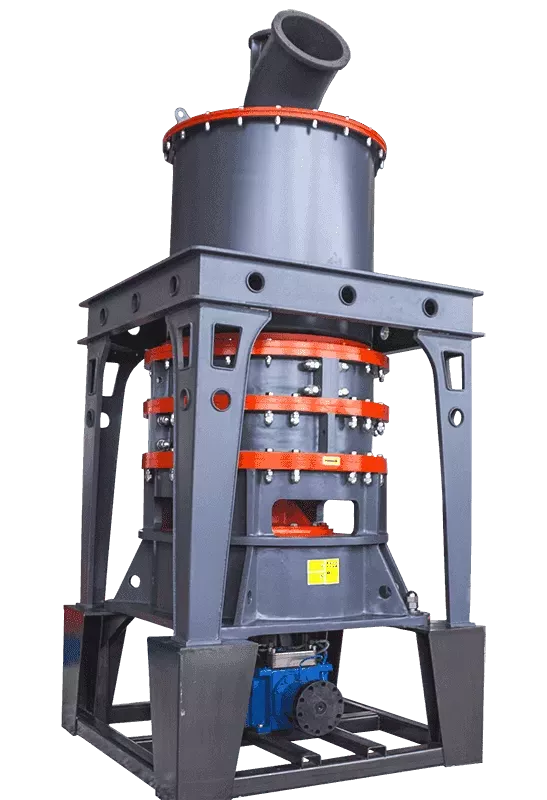
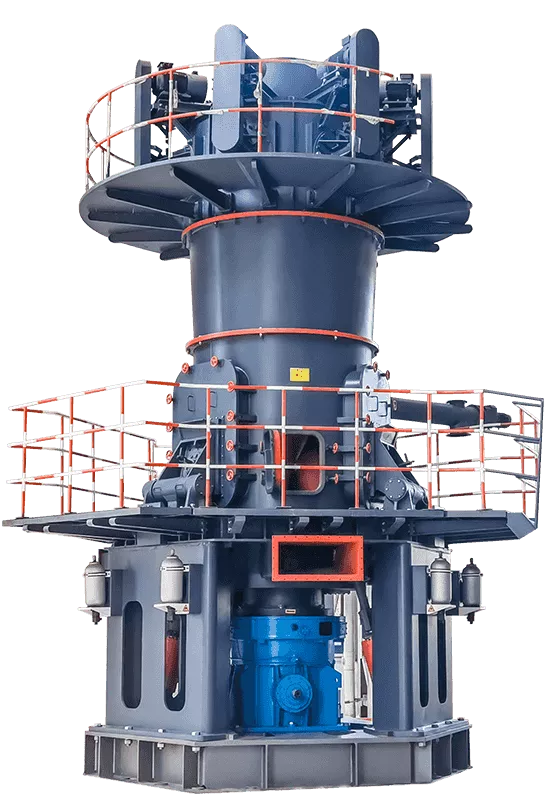
The company's main products are HGM series micro pulverizer, superfine micro pulverizer, micro pulverizer, superfine pulverizer, pulverizer and matching hammer crusher, etc.
22/09/2026 clirik
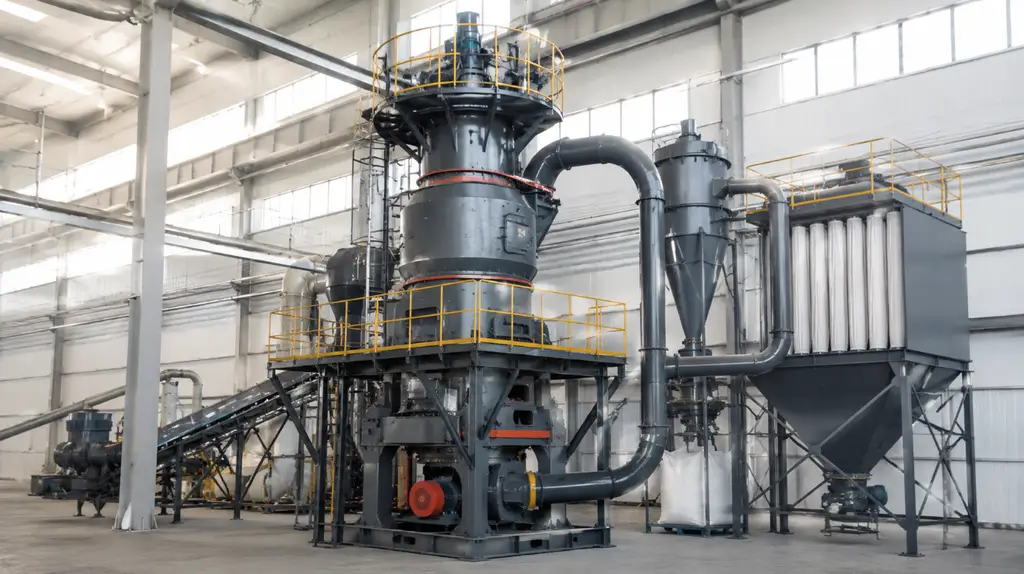
Grinding is only one part of a powder production line. After the material is ground, the next question is whether the powder has the right particle size distribution for the final application.
This is where Secondary Air Classification comes in.(If you are unfamiliar with air classifiers, you can first read our previously published articles.)
Secondary air classification is an additional classification stage installed after the main grinding and classification process, usually near the end of the grinding line. Instead of replacing the original classifier, it provides an additional opportunity to separate particles according to their aerodynamic behavior.
In a typical grinding line, the primary classifier separates the powder produced by the mill. If the final product still contains too many coarse particles, or if a narrower particle size distribution is required, a secondary air classifier can be added downstream to further refine the finished powder.
This makes secondary classification particularly useful for powder applications that require tighter particle size control, improved product consistency, or higher-value fine powder.
Different grinding systems can use different numbers of classification stages depending on the required powder quality and production target.
| Classification System | Basic Process | Main Purpose | Typical Result |
|---|---|---|---|
| One-Stage Classification | Grinding → Classification → Collection | Basic particle size control | Suitable for general powder production |
| Two-Stage Classification | Grinding → Primary Classification → Secondary Classification → Collection | Further remove coarse particles and improve size control | Finer and more consistent powder |
| Three-Stage Classification | Grinding → Primary Classification → Secondary Classification → Tertiary Classification → Collection | Multi-step particle size separation | More precise control for demanding applications |
A one-stage system is often sufficient when the required fineness and particle size distribution are relatively straightforward.
A two-stage system adds another classification step. The secondary classifier can be installed at the end of an existing grinding line, making it possible to improve powder separation without completely replacing the original grinding equipment.
A three-stage system adds another separation step when the production process requires even more detailed particle size control or multiple product fractions.
However, adding more classification stages does not automatically mean better production. The number of stages should be selected according to the raw material, required fineness, particle size distribution, capacity, and final application.
When the particle size distribution of a processed powder does not meet the application requirements, additional classification can be used to optimize the final product.For further details, you can also refer to this article:air classification of dry powders.The main purpose of secondary air classification is to provide additional control over the finished powder.
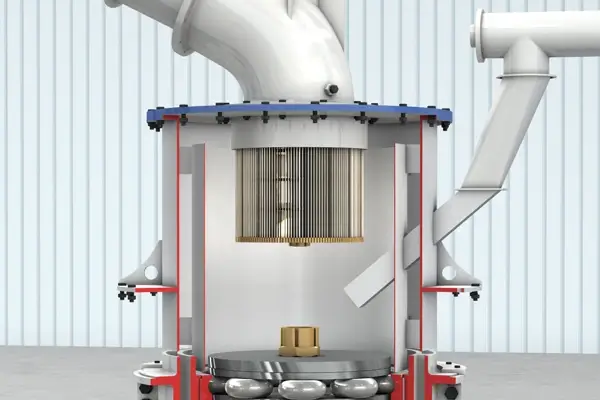
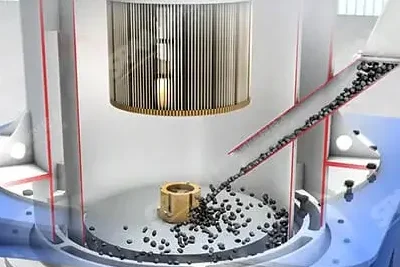
During grinding, particles do not always break into exactly the same size. Even when the primary classifier is working normally, the final powder may contain a mixture of particles with different sizes.
For applications that have strict particle size requirements, this can become an issue.
A secondary air classifier provides another separation step to help control this variation.
The most direct advantage is better control of particle size.
The secondary classifier uses airflow and centrifugal or aerodynamic forces to separate particles according to their behavior in the classification zone. Fine particles can move toward the product collection system, while coarser particles can be separated from the finished product.
This can help reduce unwanted coarse particles in the final powder.
For many industrial powders, consistency is just as important as fineness.
A powder with a more controlled particle size distribution can provide more predictable performance in applications such as coatings, plastics, rubber, ceramics, fillers, and other formulated products.
Secondary classification provides another opportunity to stabilize the final powder quality.
Not every powder produced by a grinding mill has the same commercial value.
In some applications, finer and more precisely classified powder can meet higher technical requirements.
Instead of treating the entire grinding output as one final product, a secondary classification stage can further separate the powder and create a more controlled final product.
This can add value to the existing grinding process.
The key feature of secondary air classification is its downstream position.
A simplified process can be illustrated as:
Raw Material → Crushing → Grinding → Primary Classification → Powder Collection → Secondary Air Classification → Final Product
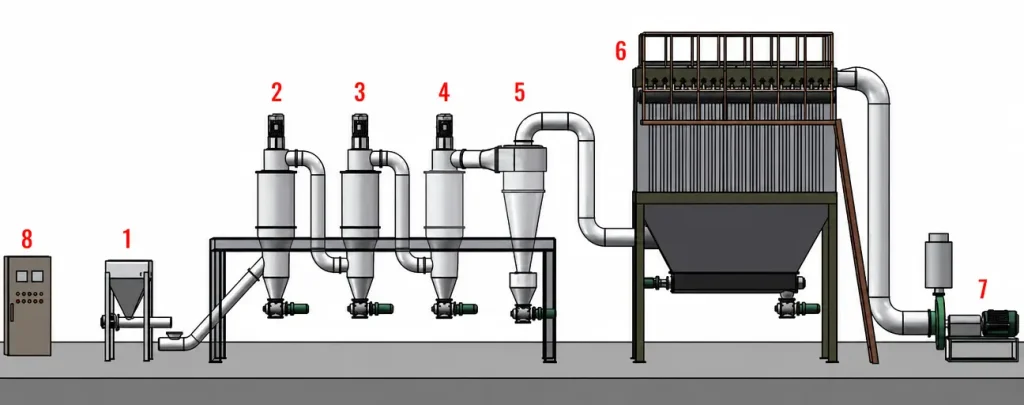
Depending on the system design, the secondary classifier can be connected with the existing conveying and collection system.
After the powder leaves the main grinding and classification process, it enters the secondary classifier. The airflow carries the powder into the classification zone, where particles are separated according to their aerodynamic characteristics.
The finer fraction continues toward the product collection system, while particles that do not meet the required classification conditions can be removed from the final product or returned to an earlier stage, depending on the plant configuration.
This makes the secondary classifier more than simply another machine. It can function as a final particle-size control point in the grinding line.
One important advantage of secondary classification is that it can be added to an existing production line.
For example, a grinding plant may already have a mill and primary classifier, but later the customer may require:
In this situation, replacing the entire grinding system may not always be necessary.
Adding a secondary air classifier at the end of the line provides another approach.
Grinding → Primary Classification → Finished Powder
Grinding → Primary Classification → Secondary Air Classification → More Precisely Classified Powder
This retrofit concept is particularly useful when the grinding equipment itself is still capable of meeting the required production capacity, but the final classification performance needs to be improved.
Not every grinding plant needs a secondary classifier.
For general-purpose powder production, a single classification stage may already provide sufficient control.
Secondary classification becomes more relevant when the final product has stricter requirements for particle size distribution.
Typical considerations include:
| Requirement | Possible Reason for Secondary Classification |
|---|---|
| Very fine powder | Additional separation of fine particles |
| Low coarse-particle content | Further removal of oversized particles |
| Narrow particle size distribution | More precise final classification |
| Higher product consistency | Better control of finished powder |
| Higher-value applications | More controlled powder specifications |
| Existing line upgrade | Improve classification without replacing the whole system |
The decision should ultimately be based on actual material tests and production requirements rather than simply adding more classification stages.
It is also important to understand that grinding and classification perform different jobs.
Grinding reduces particle size.
Classification separates particles according to size or aerodynamic behavior.
If a powder already contains a large amount of fine material but also has unwanted coarse particles, simply increasing grinding intensity may not be the most efficient solution.
A secondary classifier can instead focus on separating the powder that has already been produced.
This distinction is important when optimizing a complete grinding line.
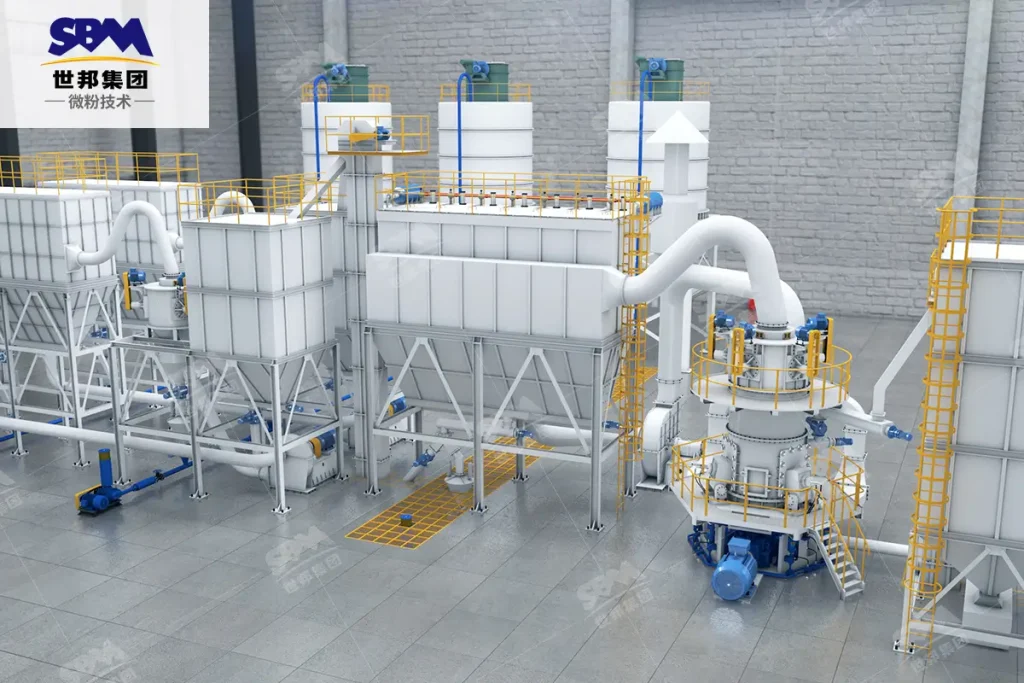
A grinding mill determines how the material is reduced in size, while classification determines which particles become the final product.
When a single classification stage cannot provide the required particle size control, adding a Secondary Air Classification stage at the end of the grinding line can provide an additional level of separation and product control.
If you are considering upgrading an existing grinding line, the key factors include feed material, current powder fineness, required particle size distribution, production capacity, and existing equipment configuration.
A properly designed secondary classification system can help turn an ordinary grinding line into a more precisely controlled powder production process.
Secondary Air Classification is an additional particle separation stage installed downstream of the main grinding and classification process to further control the particle size of the finished powder.
It is generally installed near the end of the grinding line, after the primary grinding and classification process, before the final product is delivered or packed.
Primary classification normally separates the powder generated by the grinding mill. Secondary classification provides an additional separation step to further control the finished powder and remove unwanted coarse particles.
No. Whether it is necessary depends on the required fineness, particle size distribution, product quality, capacity, and final application.
In many plant configurations, a secondary classifier can be integrated into an existing production line. The actual feasibility depends on the existing mill, airflow system, conveying system, product fineness, and required capacity.
If you have some questions about our products, please feel free to fill out the form below, and we will contact you within 24 hours.