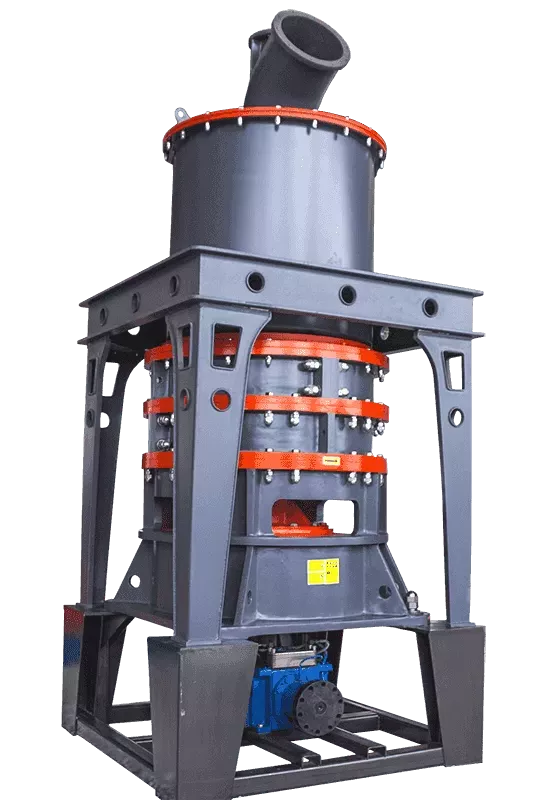
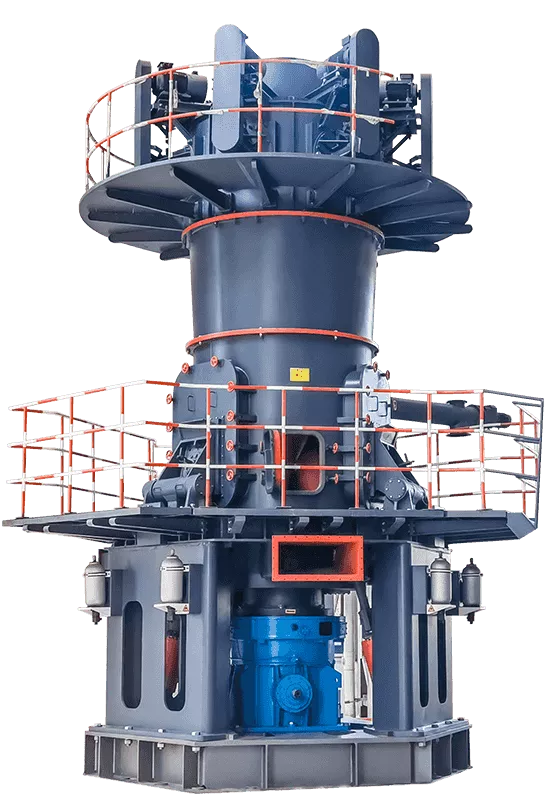
The company's main products are HGM series micro pulverizer, superfine micro pulverizer, micro pulverizer, superfine pulverizer, pulverizer and matching hammer crusher, etc.
04/11/2026 clirik
Talc Grinding Challenges may seem surprising because talc has a Mohs hardness of only 1, making it one of the softest minerals. However, industrial talc grinding can still suffer from low production yield, rapid wear of grinding parts, and reduced powder whiteness. These problems show that mineral hardness alone does not determine grinding performance. Particle structure, associated minerals, grinding conditions, and classification efficiency all play important roles.These factors are among the main Talc Grinding Challenges in fine powder production.
Talc has a layered silicate structure. Its crystal layers are weakly bonded, allowing them to slide or separate easily. When mechanical force is applied, talc particles tend to split along their cleavage planes and form thin, plate-like particles rather than simply breaking into smaller, roughly spherical grains.These Talc Grinding Challenges are closely related to the mineral’s layered structure, which makes particle size reduction more complicated than its low Mohs hardness might suggest.
This characteristic affects the grinding process in several ways.
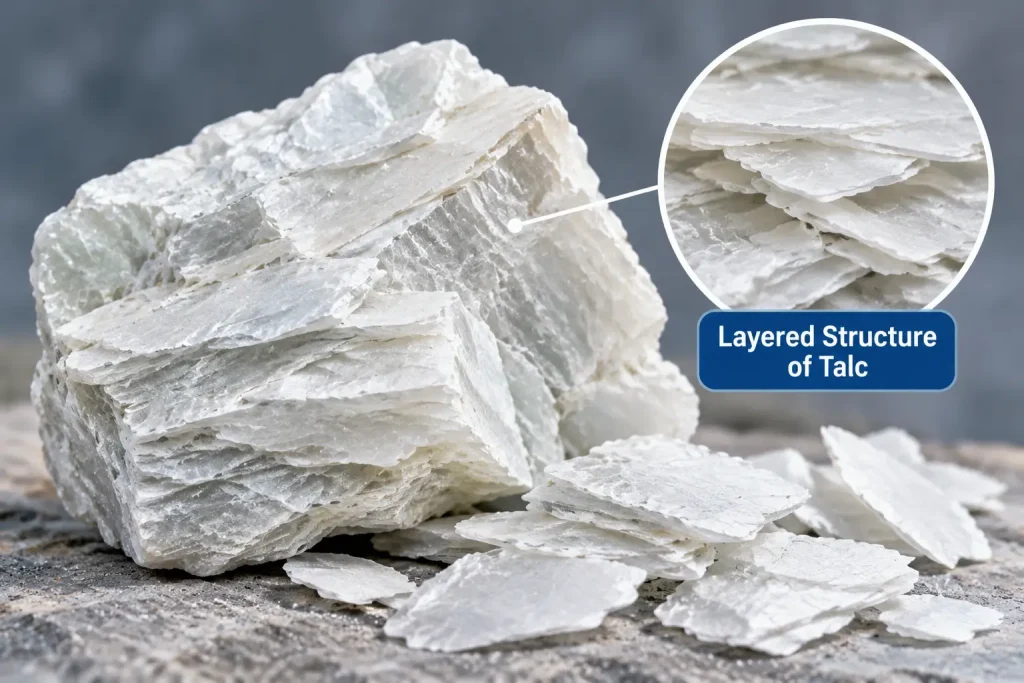
A talc particle may become very thin while retaining a relatively large length and width. As a result, particle thickness can decrease without the overall particle size reaching the required specification.
For applications requiring fine or ultra-fine talc, the grinding system must do more than break large particles. It must also control platelet dimensions and produce a consistent particle size distribution.
As grinding continues, the specific surface area of talc increases. Under dry grinding conditions, fine particles may adhere to one another and form agglomerates. This can limit further size reduction and make it more difficult to achieve a stable fine-powder product.
Research on dry talc grinding has identified particle agglomeration as an important limitation in achieving further particle-size reduction.In fine talc powder production, Talc Grinding Challenges can become more noticeable when fine particles tend to agglomerate and resist further size reduction.
Grinding capacity is not determined by the mill alone. The classifier must separate qualified fine powder from coarse particles and return oversized material for further grinding.
If the classifier is overloaded or the circulating load becomes excessive, material can accumulate inside the closed-circuit system. This reduces effective production capacity, even when the mill itself is operating.
Therefore, low talc grinding yield may result from a combination of particle morphology, agglomeration, grinding conditions, and classification efficiency.These factors are among the main Talc Grinding Challenges in fine powder production.
For more information about equipment used in fine and ultra-fine talc production, explore our guide to the talc ultra-fine powder grinding mill and its processing applications.
If talc is so soft, why can grinding rollers, liners, and other wear parts still wear out quickly?
The key is the difference between pure talc and natural talc ore.
Commercial talc deposits do not always contain pure talc. Depending on their geological origin, they may contain associated minerals such as quartz, chlorite, dolomite, calcite, mica, iron oxides, and other mineral impurities.
Some of these associated minerals are considerably harder than talc. Quartz, for example, has a Mohs hardness of approximately 7. When hard particles enter the grinding chamber, they can increase abrasive wear on rollers, liners, and other contact surfaces.
The actual wear rate therefore depends on the mineral composition of the feed material, not simply the hardness of talc.
Operating conditions also matter. Excessive grinding pressure, unsuitable rotor or roller speed, high material velocity, and inappropriate wear-part materials can accelerate equipment wear.
To improve service life, operators should evaluate the raw ore before selecting a grinding system. Removing hard impurities where practical, choosing suitable wear-resistant materials, and optimizing operating parameters can help reduce unnecessary wear.
Understanding these Talc Grinding Challenges helps operators identify whether wear is caused by the ore itself or by the grinding system.Among the major Talc Grinding Challenges, unexpected abrasive wear is often associated with hard impurities in the raw ore rather than the softness of pure talc.
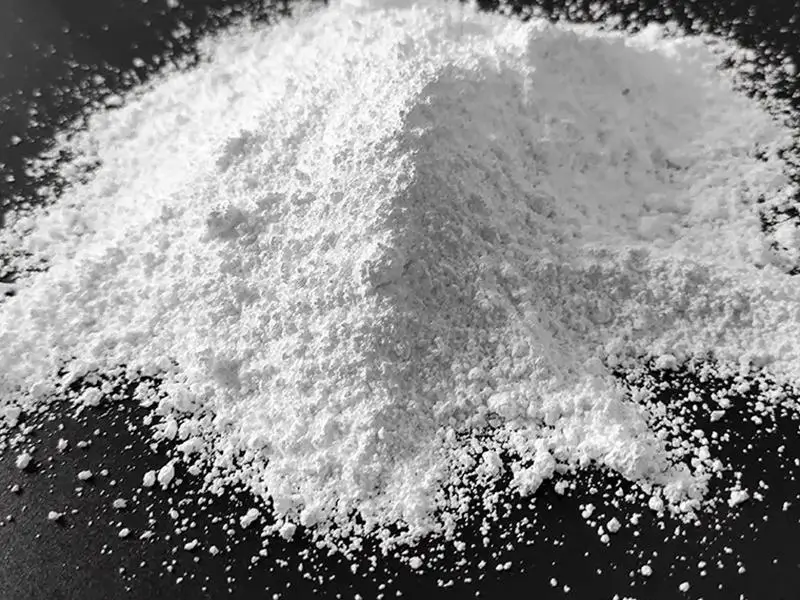
High whiteness is an important quality requirement for many talc applications, including coatings, plastics, paper, rubber, and cosmetic-grade products.
However, the whiteness of finished talc powder may be lower than expected. Two major factors should be considered.
Natural talc can occur in white, gray, green, or brown varieties. Its appearance depends partly on its geological origin and associated minerals.
Iron-bearing minerals, iron oxides, and other colored impurities can affect the brightness and color of the final powder. Some talc deposits also contain chlorite and other associated minerals that influence product appearance.
For this reason, grinding alone cannot turn every talc ore into high-whiteness powder. Raw material selection and beneficiation may be necessary before grinding. Depending on the ore, sorting, washing, flotation, or magnetic separation may help remove unwanted impurities.Understanding these Talc Grinding Challenges helps operators identify whether wear is caused by the ore itself or by the grinding system.
The grinding process itself can also affect product whiteness.
When metal components such as grinding rollers, liners, or grinding media wear during operation, small metal particles may enter the powder. Iron contamination is particularly important when the finished product requires high purity and brightness.
This is why equipment material selection matters. For high-whiteness talc production, manufacturers should consider the material of all components that come into contact with the powder, as well as the potential for wear-related contamination.
If whiteness decreases during production, comparing the raw ore and finished powder through whiteness testing and chemical analysis can help identify whether the main cause is raw material impurity or equipment-related contamination.
Improving talc grinding performance requires a complete process approach rather than simply increasing grinding pressure or operating speed.
Several measures can help:
These measures should be selected according to the characteristics of the specific talc deposit and the final product requirements.A well-designed talc powder processing system should combine suitable grinding equipment, effective classification, and appropriate material handling to achieve consistent product quality.
Choosing a talc grinding mill requires more than checking the maximum fineness or rated capacity. A suitable system should balance production output, particle size control, product whiteness, and wear-part service life.
Before selecting equipment, consider the following factors:
| Selection Factor | What to Evaluate |
|---|---|
| Raw material composition | Talc content, quartz, iron-bearing minerals, and other impurities |
| Required fineness | Target particle size and particle size distribution |
| Production capacity | Required output at the specified fineness |
| Product whiteness | Whether low-iron or non-metallic contact materials are needed |
| Wear resistance | Expected abrasion and suitable wear-part materials |
| Classification system | Whether the classifier can maintain stable separation and product consistency |
For standard talc powder, a properly configured grinding and classification system may be sufficient. Talc Grinding Challenges cannot be explained by Mohs hardness alone.For fine or ultra-fine talc products, the mill and classifier should be selected together to control particle size and prevent excessive circulating loads.
When whiteness is a priority, raw material beneficiation and contamination control should also be considered as part of the complete production line.Different production requirements call for different equipment configurations. You can also learn more about the working principles of a talcum powder making machine before selecting a suitable model.
1. Is talc easy to grind because its Mohs hardness is 1?
Not necessarily. Talc is very soft, but its layered structure causes it to form thin plate-like particles. Fine-particle agglomeration and classification difficulties can also limit grinding efficiency.
2. Why does talc grinding equipment wear out if talc is so soft?
Natural talc ore may contain harder associated minerals, such as quartz. These impurities can increase abrasive wear on grinding rollers, liners, and other components.
3. What causes low whiteness in talc powder?
Common causes include iron-bearing minerals and other colored impurities in the raw ore, as well as possible metal contamination from worn grinding components.
4. Can grinding alone improve talc whiteness?
Not always. If the raw material contains iron oxides or other colored impurities, sorting, flotation, magnetic separation, or other beneficiation methods may be required before grinding.
5. What is important when selecting a talc grinding mill?
The main considerations are raw material composition, required fineness, production capacity, product whiteness, wear resistance, and classification efficiency.
If you have some questions about our products, please feel free to fill out the form below, and we will contact you within 24 hours.