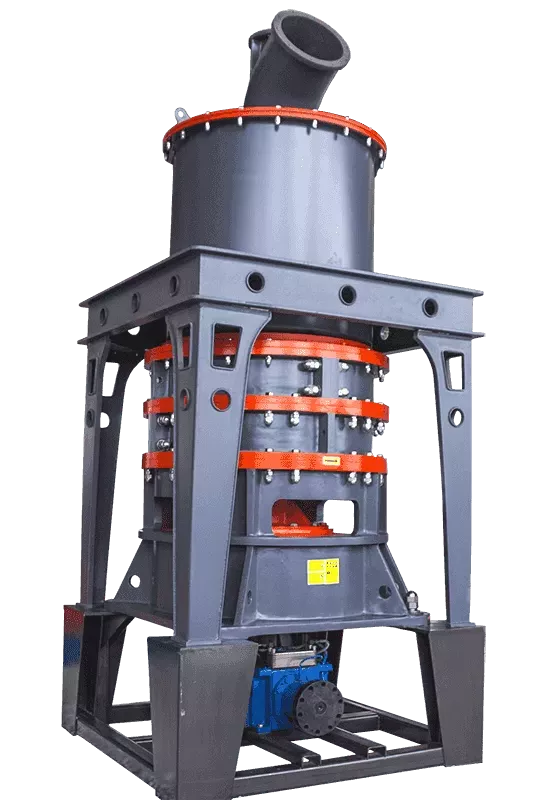
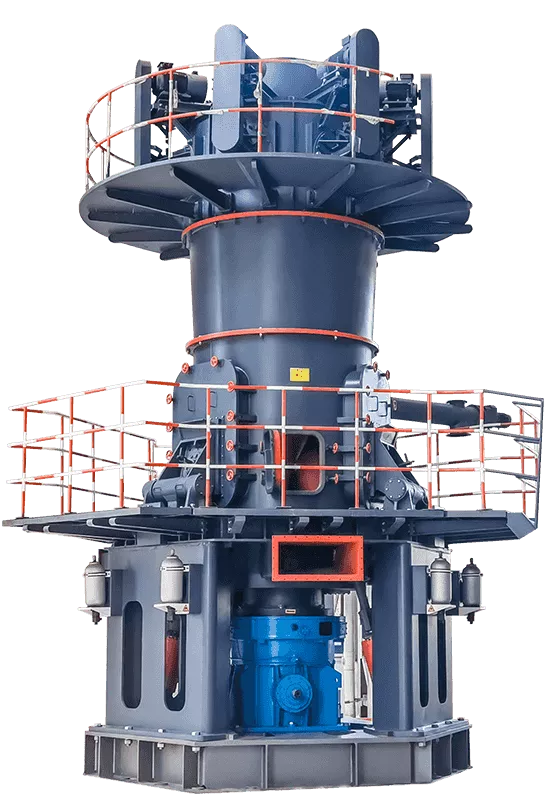
The company's main products are HGM series micro pulverizer, superfine micro pulverizer, micro pulverizer, superfine pulverizer, pulverizer and matching hammer crusher, etc.
19/11/2026 clirik
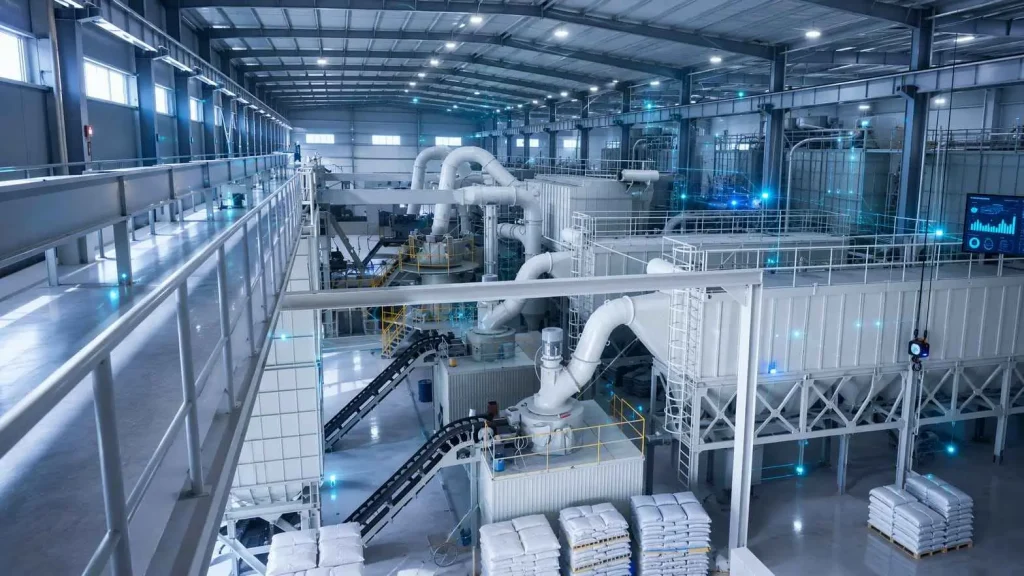
Mineral grinding automation is changing how modern grinding plants monitor equipment, control production, and manage maintenance. Instead of relying only on manual inspections and operator experience, connected sensors, PLC systems, and industrial software can provide continuous information about the operating condition of a grinding line.
A grinding mill does not usually develop a serious problem without any warning. Motor current may begin to fluctuate, bearing temperature may gradually increase, vibration may change, or the feeding rate may become unstable.
The challenge is that these changes are not always easy to identify in a conventional mineral grinding plant.
This is where IoT and automation become useful. By connecting grinding mills, feeders, classifiers, blowers, dust collectors, and other equipment, manufacturers can build a more visible and coordinated production system.
The goal is not simply to make a grinding plant “smart.” The more practical objective is to help operators understand what is happening inside the production line, respond to abnormal conditions earlier, and use production data to improve daily operation.
The Internet of Things, or IoT, connects physical equipment with sensors, communication systems, and software platforms.
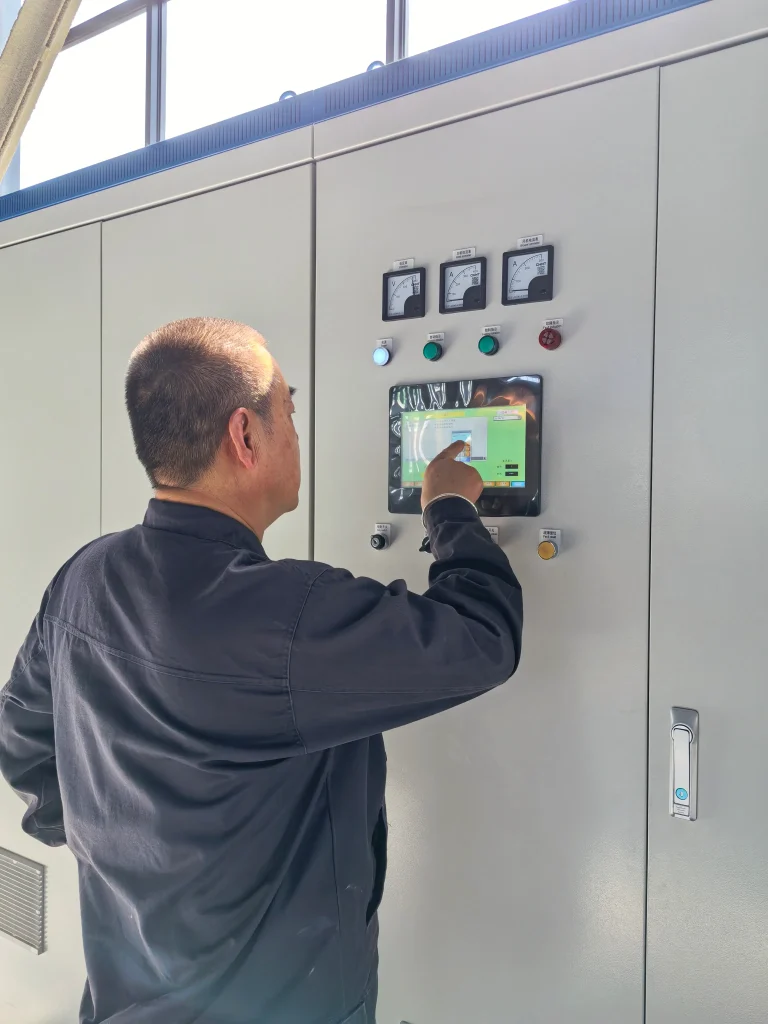
In a mineral grinding plant, sensors can collect information from different parts of the production line. Depending on the equipment and process, these measurements may include:
The purpose is not to install as many sensors as possible.
The important question is whether the information being collected can help operators understand changes in equipment condition or production performance.
For example, an increase in motor current does not necessarily mean that a grinding mill has a mechanical problem. The feeding rate may have increased, the raw material may have changed, or the airflow through the system may have been affected.
When several operating parameters are monitored together, it becomes easier to investigate the actual cause.
This is one of the practical advantages of IoT-based mineral grinding automation: it connects individual equipment readings into a broader picture of the production process.
IoT mainly provides information. Automation goes one step further by using information to control equipment.
A modern grinding line may combine sensors, Programmable Logic Controllers (PLCs), Supervisory Control and Data Acquisition (SCADA) systems, variable-frequency drives, and other industrial control components.
A simplified system can be understood as:
Sensors → PLC → SCADA → Operator
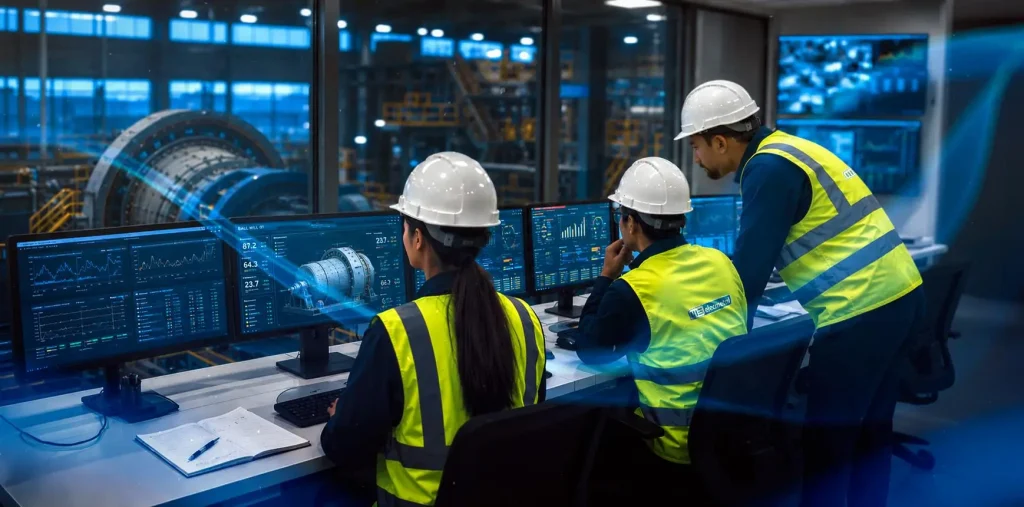
Sensors collect operating information.
The PLC executes programmed control logic.
SCADA displays equipment status, alarms, trends, and selected process parameters.
Operators can then monitor the production line and make adjustments when necessary.
Depending on the equipment configuration, some operating parameters can also be adjusted automatically.
This is where mineral grinding automation becomes more than simple equipment monitoring.
Grinding equipment operates continuously under mechanical and electrical loads.
Without continuous monitoring, operators may only discover abnormal conditions during routine inspection or after production performance has already changed.
With suitable sensors, important operating parameters can be monitored continuously.
A review published in Minerals Engineering discusses methods for real-time mill condition monitoring, including sensor-based approaches for detecting liner wear and equipment faults in AG/SAG mills.
For example, a gradual increase in bearing temperature or vibration may provide a reason for the maintenance team to inspect the equipment.
This does not mean that every change indicates an imminent failure. Instead, the information provides an additional reference for maintenance decisions.
Feeding conditions have a direct influence on grinding performance.
If too much material enters the mill, equipment load may increase. If the feeding rate becomes too low, available grinding capacity may not be fully utilized.
An automated feeder can regulate material flow according to predefined operating conditions or available feedback signals.
The objective is not simply to increase the feeding rate.
It is to maintain a more consistent material supply that matches the capacity and operating condition of the grinding system.
For mineral grinding automation, stable feeding is therefore one of the basic elements of process control.
Grinding and classification are closely connected in fine powder production.
The grinding system reduces the particle size, while the classifier separates particles according to the required product characteristics.
Classifier speed, airflow, feeding rate, and other process parameters can affect the final operating condition.
Automation makes these parameters easier to monitor and, where the system supports it, adjust.
For example, an ultrafine powder production line may require different classifier conditions from a system producing a coarser mineral powder.
The exact control strategy depends on the grinding technology, material properties, required fineness, and production line configuration.
To understand how particle separation works, see our guide to the air classification system used in fine powder processing.
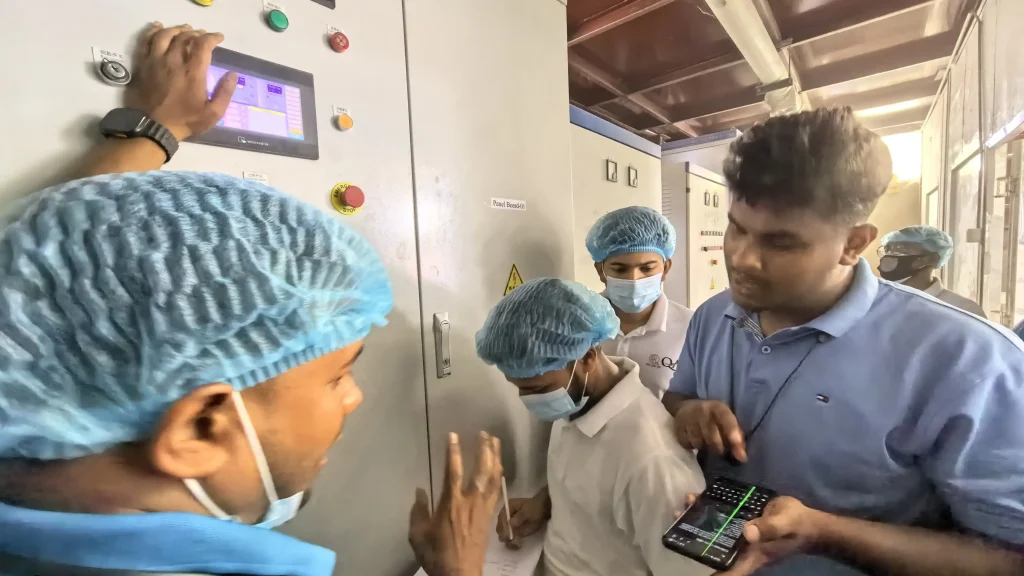
Research on data-driven prognostics and health management in mining processing machinery highlights the role of equipment data and condition monitoring in fault detection and maintenance decisions.
Traditional preventive maintenance often relies on operating hours or fixed inspection schedules.
These methods are still useful, but they do not always reflect the actual condition of a machine.
Mineral grinding automation can add another layer of information.
Temperature, vibration, motor current, and other signals can be recorded over time. Maintenance teams can compare current readings with historical operating conditions and investigate unusual changes.
When sufficient historical data is available, more advanced condition monitoring and predictive maintenance methods can also be introduced.
However, predictive maintenance depends heavily on reliable sensors, consistent data collection, and appropriate analysis. Software alone cannot replace proper equipment inspection.
Grinding is an energy-intensive industrial process.
For this reason, monitoring total electricity consumption is useful, but it does not tell the whole story.
A more meaningful indicator is the amount of electricity required to produce a unit of finished powder.
For example:
Specific Energy Consumption = Electricity Consumption ÷ Finished Product Output
This value can be expressed in kWh per ton.
By recording production output and energy consumption together, a manufacturer can compare different production periods and identify conditions associated with higher or lower energy use.
This provides a more useful basis for evaluating process changes than looking at electricity consumption alone.
Mineral powder customers often require consistent particle size and product characteristics.
Changes in feeding conditions, grinding load, airflow, or classification can influence the production process.
Automation does not directly guarantee a specific product quality. However, it can help operators maintain more consistent process conditions.
For example, monitoring classifier speed and relevant airflow conditions can help operators understand changes that may affect particle-size distribution.
Where precise quality control is required, process monitoring should be combined with appropriate laboratory testing or online particle-size measurement.
A complete grinding plant may contain many separate machines:
When every machine is monitored separately, it can be difficult to understand the condition of the entire production line.
A centralized control system can bring selected information together.
Operators may be able to see equipment status, alarms, operating trends, and production information from a single interface.
This makes mineral grinding automation useful not only for individual machines but also for overall production management.
Automation requirements differ between grinding technologies.
There is no universal monitoring configuration that is suitable for every mineral grinding plant.
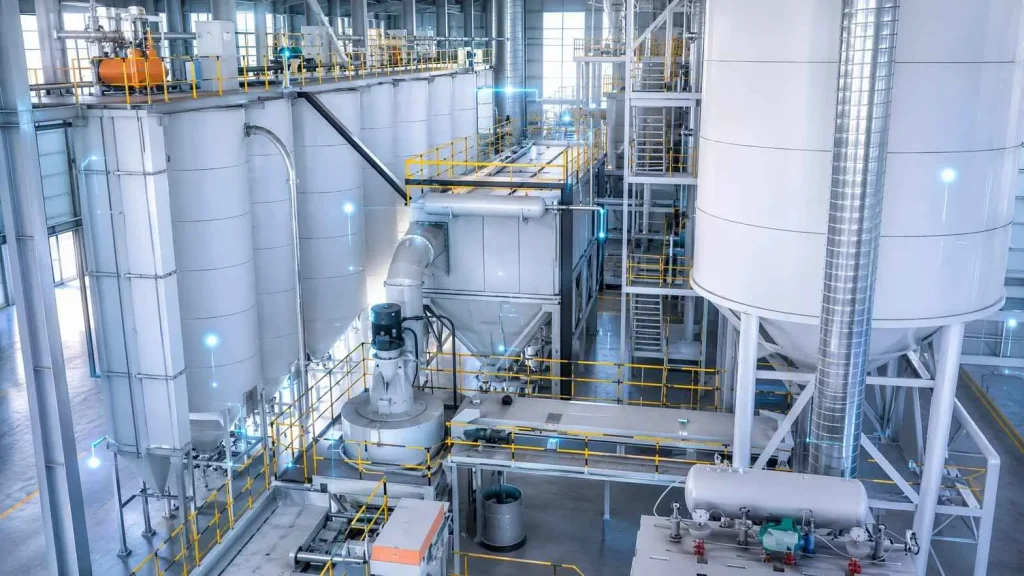
For vertical grinding systems, monitoring may include main motor current, vibration, bearing temperature, feeding conditions, and other equipment-specific parameters.
These measurements can help operators understand whether the mill is operating within the expected range.
Ultrafine grinding systems normally require close coordination between grinding and classification.
For example, modern ultrafine grinding mills can integrate grinding, classification, and powder collection into a coordinated processing system.
Depending on the equipment design, useful monitoring points may include classifier speed, airflow, system pressure, feeding rate, and motor load.
This information can help operators investigate changes in production capacity or product fineness.
Air classifiers play an important role in producing fine and ultrafine mineral powders.
Monitoring classifier speed, airflow, pressure, and related operating conditions can provide useful information about the classification process.
This becomes particularly important when the grinding line is designed to produce different grades of powder.
The greatest value often comes from connecting different stages rather than automating only one machine.
A complete system can connect:
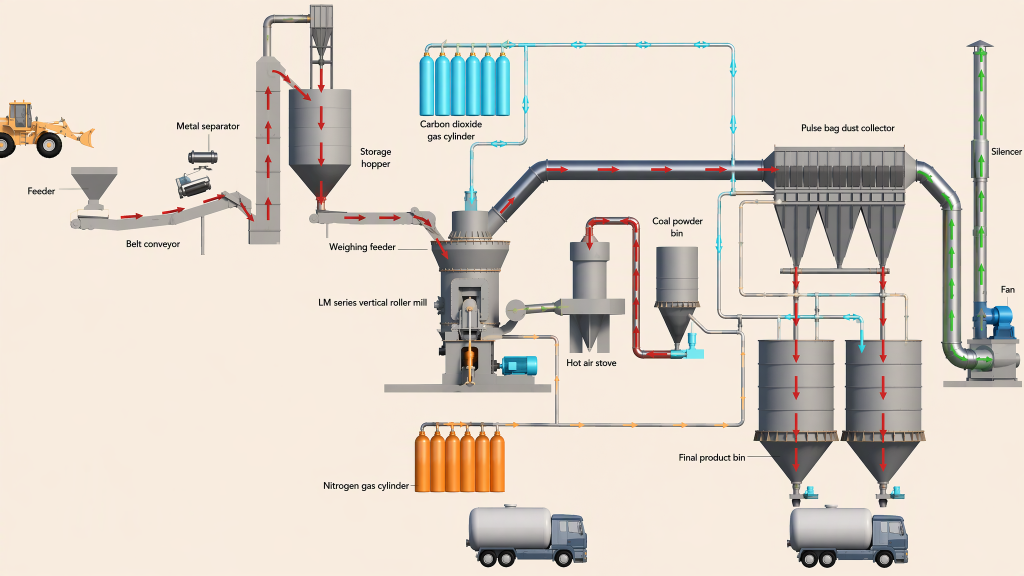
Feeding → Grinding → Classification → Dust Collection → Powder Collection → Conveying
In a complete ultrafine grinding production line, feeders, mills, classifiers, blowers, and dust collectors need to work together to maintain stable operation.This allows the production line to be managed as a coordinated system.
These technologies are often discussed together, but they perform different functions.
| Technology | Main Role | Example in a Grinding Plant |
|---|---|---|
| Sensors | Measure physical conditions | Temperature, vibration, current, pressure |
| PLC | Execute control logic | Feeder control and equipment interlocking |
| SCADA | Monitor and visualize production | Alarms, trends, and equipment status |
| IoT | Connect equipment and data | Transfer operating information between systems |
| Data Analytics | Analyze historical and real-time data | Identify operating trends |
| AI | Support advanced analysis | Anomaly detection and prediction |
| Digital Twin | Represent a physical system digitally | Process simulation and optimization |
A plant does not need to implement all of these technologies at once.
For many factories, reliable sensors, PLC control, equipment interlocking, and centralized monitoring can provide significant practical value before advanced AI is introduced.
AI is often presented as the most important part of a smart factory, but it is not necessarily the first technology a grinding plant should adopt.
A plant may gain more immediate value from:
AI becomes more useful when sufficient reliable historical data has been collected.
For example, if a plant wants to develop predictive maintenance models, it needs consistent equipment data as well as records of inspections, maintenance activities, and actual failures.
Without this foundation, advanced software may provide limited practical value.
An existing production line does not necessarily need to be replaced to introduce mineral grinding automation.
A staged upgrade can often be more practical.
Start with equipment that has a major influence on production.
This may include the main grinding mill, classifier, feeder, blower, and dust collection system.
Determine which operating conditions are actually important.
For example:
The answers will determine which sensors and signals are worth collecting.
Existing machines can potentially be connected through sensors, PLC modules, communication interfaces, and industrial control networks.
Older equipment may require additional hardware or modifications.
The actual solution depends on the equipment’s electrical configuration and available control interfaces.
Start with practical functions such as:
Once these functions operate reliably, more advanced process control can be considered.
Collecting data is only useful if the production team uses it.
Manufacturers can compare:
Over time, these records can reveal production patterns that are difficult to identify through occasional manual inspections.
Automation can improve production management, but it also introduces new requirements.
Older grinding machines may not have modern communication interfaces.
Additional sensors, controllers, or signal converters may therefore be required.
Poorly calibrated sensors can produce misleading information.
Installing more sensors does not automatically produce better decisions.
Sensors, control hardware, software, communication equipment, and engineering work all require investment.
The expected benefits should therefore be evaluated against the actual production problems of the plant.
Automation does not eliminate the need for experienced operators.
Personnel still need to understand equipment behavior, alarm conditions, process trends, and appropriate responses.
As more production equipment becomes connected, network reliability, access control, backups, and cybersecurity also become important parts of system design.
For industrial control systems, reliability and security should be considered alongside automation functions. The NIST Guide to Operational Technology Security provides guidance on protecting connected control systems.
The purpose of automation is not simply to remove people from the production process.
A well-designed system should help operators see problems earlier, understand process conditions more clearly, and make better decisions.
For a mineral grinding plant, digitalization can be quite practical.
A feeder can maintain a more stable material flow.
A temperature sensor can identify an unusual change.
A classifier can be monitored from a central control room.
An alarm can notify maintenance personnel when an operating parameter moves outside its expected range.
Production data can show how much electricity is being used to produce each ton of finished powder.
These functions may seem simple individually, but together they can change the way a grinding plant is operated.
IoT provides the connection. Automation provides the control. Data provides the basis for improvement.
For modern mineral powder producers, the next step toward a smarter grinding plant does not necessarily mean building a completely autonomous factory. It may simply mean creating a production system where the right information is available at the right time, and where equipment can respond more consistently to changing operating conditions.
Mineral grinding automation uses sensors, PLCs, control systems, and industrial software to monitor and control equipment used in mineral grinding and classification processes.
Automation can help regulate feeding, monitor operating conditions, and coordinate connected equipment. The actual improvement depends on the grinding technology, material characteristics, control strategy, and operating conditions.
Depending on the plant design, feeders, grinding mills, air classifiers, blowers, conveyors, dust collectors, elevators, and powder collection systems can be integrated into an automated control system.
No. Basic sensors, PLC control, equipment interlocking, centralized monitoring, and reliable data collection can provide significant benefits before AI is introduced.
In many cases, existing grinding equipment can be upgraded with additional sensors, control modules, communication interfaces, and monitoring software. The feasibility depends on the age, electrical configuration, control system, and available interfaces of the equipment.
If you have some questions about our products, please feel free to fill out the form below, and we will contact you within 24 hours.